


Dental implants are one of the most advanced tooth replacement solutions available today. They are designed to replace missing tooth roots and effectively address various dental issues. Dental implants help restore the dentition comprehensively, providing excellent chewing function and a confident smile.
What Is a Dental Implant? How Many Types of Implant Posts Are There?
A dental implant is an artificial tooth root made of titanium that is surgically placed into the jawbone to replace a missing natural tooth root. The implant post serves as a stable foundation for a dental crown or bridge, helping restore both chewing function and the aesthetics of your smile.
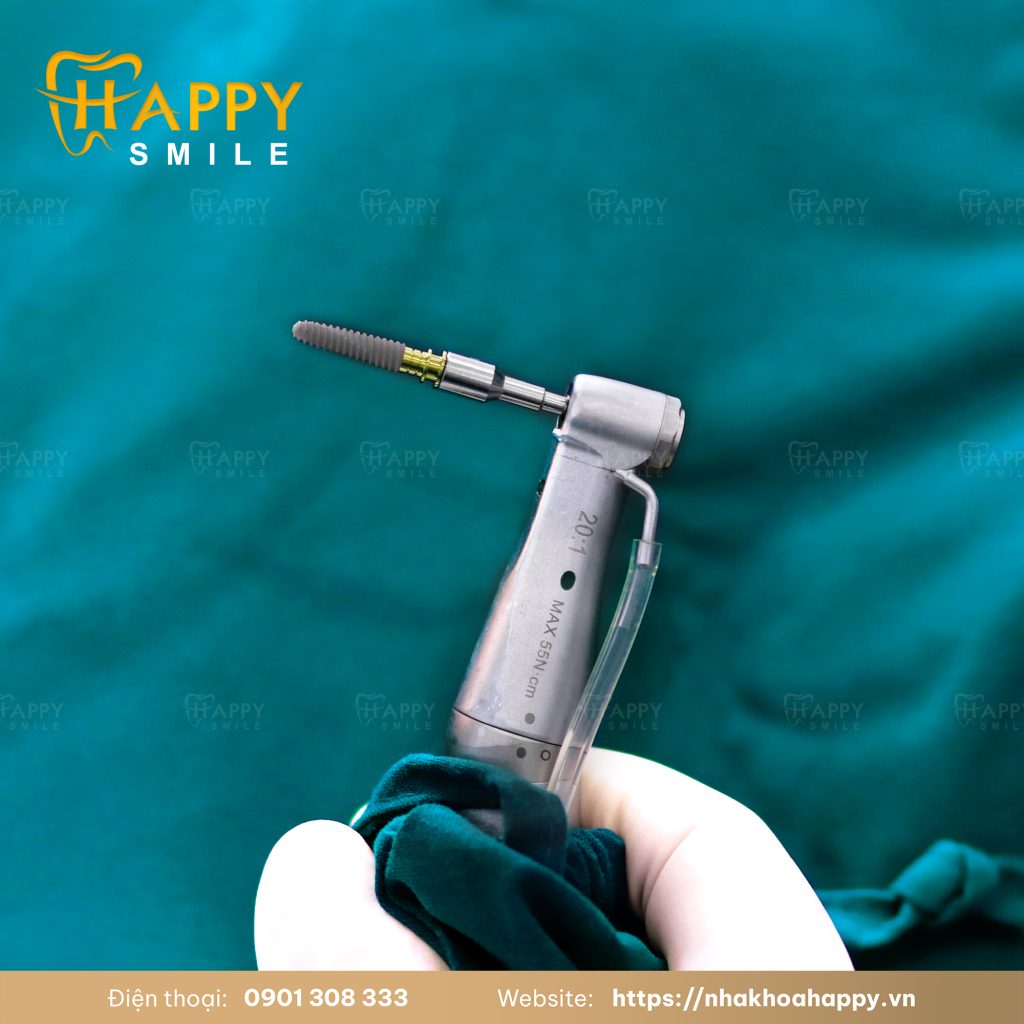
A dental implant acts as an artificial tooth root that replaces a missing natural root.
Today, there are many different types of dental implant posts available on the market. They can be classified based on several factors, including:
Material
Titanium is the most commonly used material for implant posts due to its strength and excellent biocompatibility. However, some implants are also made from zirconia or PEEK.
Shape
Dental implants are available in various designs, such as cylindrical implants, tapered implants, and screw-shaped implants.
Size
Implant posts come in different sizes to accommodate specific clinical situations and patient needs.
Dental implants are available in a wide range of sizes, materials, and designs.
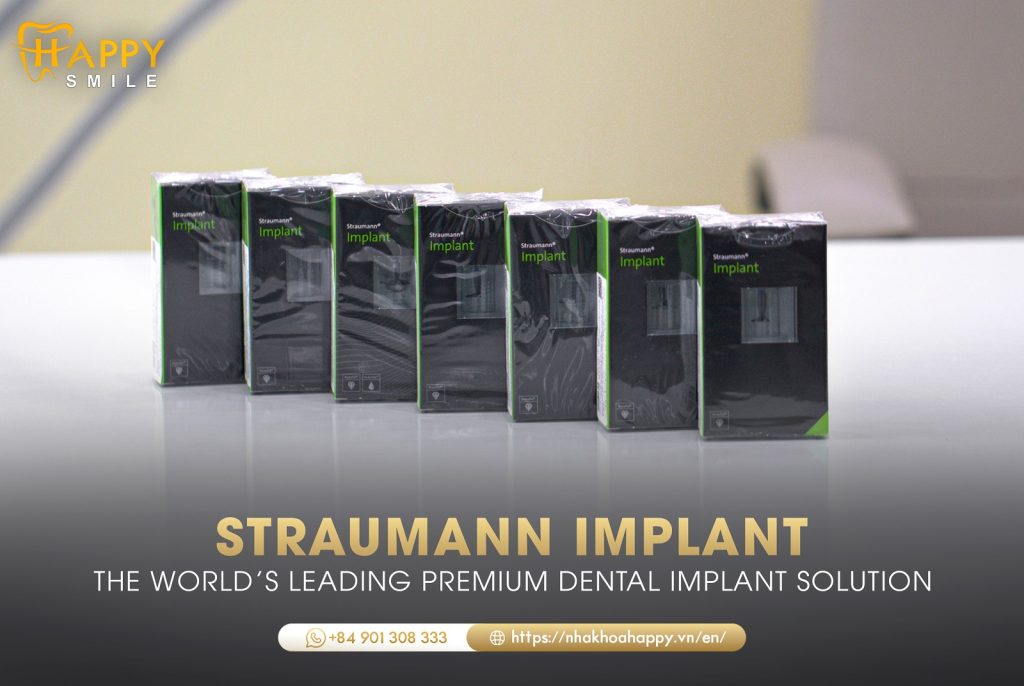
Some of the most commonly used implant systems include:
By Brand
- Biotem (Korea)
- MegaGen AnyRidge (Korea)
- DIO Implant (Korea)
- SIC Swiss Implant System (Switzerland)
- Straumann SLA (Switzerland)
- Straumann SLActive (Switzerland)
- NobelActive (USA)

By Surface Technology
- SLA Implants
- TiUnite Implants
Choosing the most suitable implant system depends on several factors, including your oral health condition, the location of the missing tooth, bone quality, and treatment budget. Therefore, it is important to consult with a qualified dentist for personalized recommendations.
Structure and Functions of Dental Implants
2.1 Structure
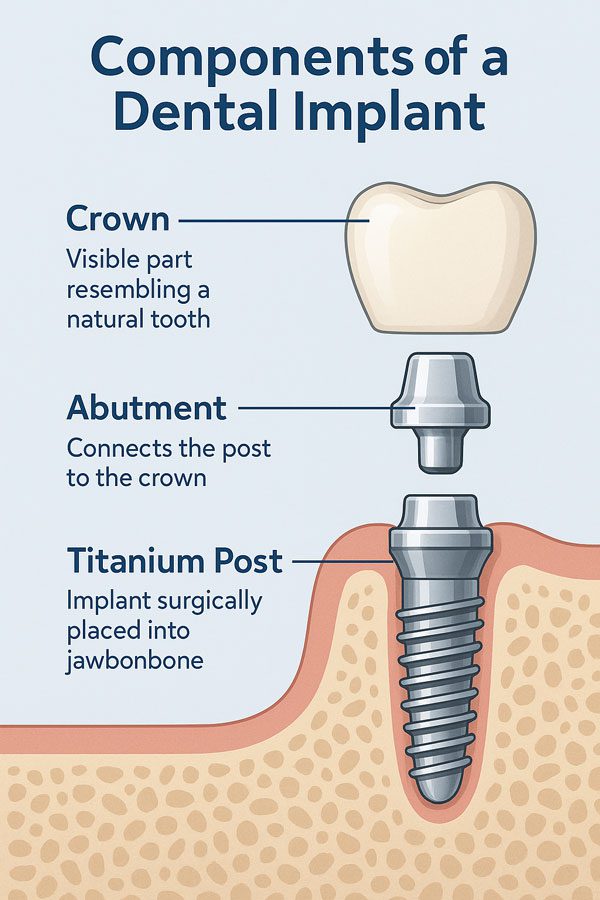
A dental implant restoration consists of three main components:
– Implant Fixture
The implant fixture is the portion surgically inserted into the jawbone. It is typically made of titanium, offering exceptional durability and excellent biocompatibility with the human body.
– Abutment
The abutment connects the implant fixture to the dental crown. It may be fabricated from titanium or zirconia, depending on the treatment plan.
– Dental Crown
The crown is the visible part of the restoration that restores both chewing function and smile aesthetics. It is made from high-quality ceramic materials designed to closely resemble natural teeth in color and translucency.
A complete dental implant restoration consists of three primary components.
2.2 Functions
Replacing Missing Tooth Roots
Dental implants restore chewing function, allowing patients to eat comfortably and enjoy a wider variety of foods.
Preventing Jawbone Loss
After tooth loss, the jawbone gradually deteriorates due to a lack of stimulation. Dental implants help prevent bone resorption, preserving facial structure and maintaining a youthful appearance.
Enhancing Aesthetics
Dental implants restore a natural-looking smile, helping patients feel more confident in daily communication and social interactions.
Benefits of Dental Implants
Dental implants offer numerous advantages, including:
+ Strength and Stability Similar to Natural Teeth
Implants provide excellent stability, allowing replacement teeth to function much like natural teeth. Patients can chew, speak, and smile with confidence.
+ Long-Term Durability
Thanks to their stability and high-quality materials, dental implants can last for many years and often outperform other tooth replacement options.
+ Comfortable and Convenient
Unlike removable dentures, implant-supported restorations do not shift or cause discomfort, helping patients feel more comfortable in their daily lives.
+ Prevention of Bone Loss
Because implants are anchored directly into the jawbone, they help preserve bone density and prevent the bone loss commonly associated with missing teeth.
+ Preservation of Facial Structure
Dental implants not only restore missing teeth but also help maintain the natural contours of the face, preventing the sunken appearance that may occur after tooth loss.
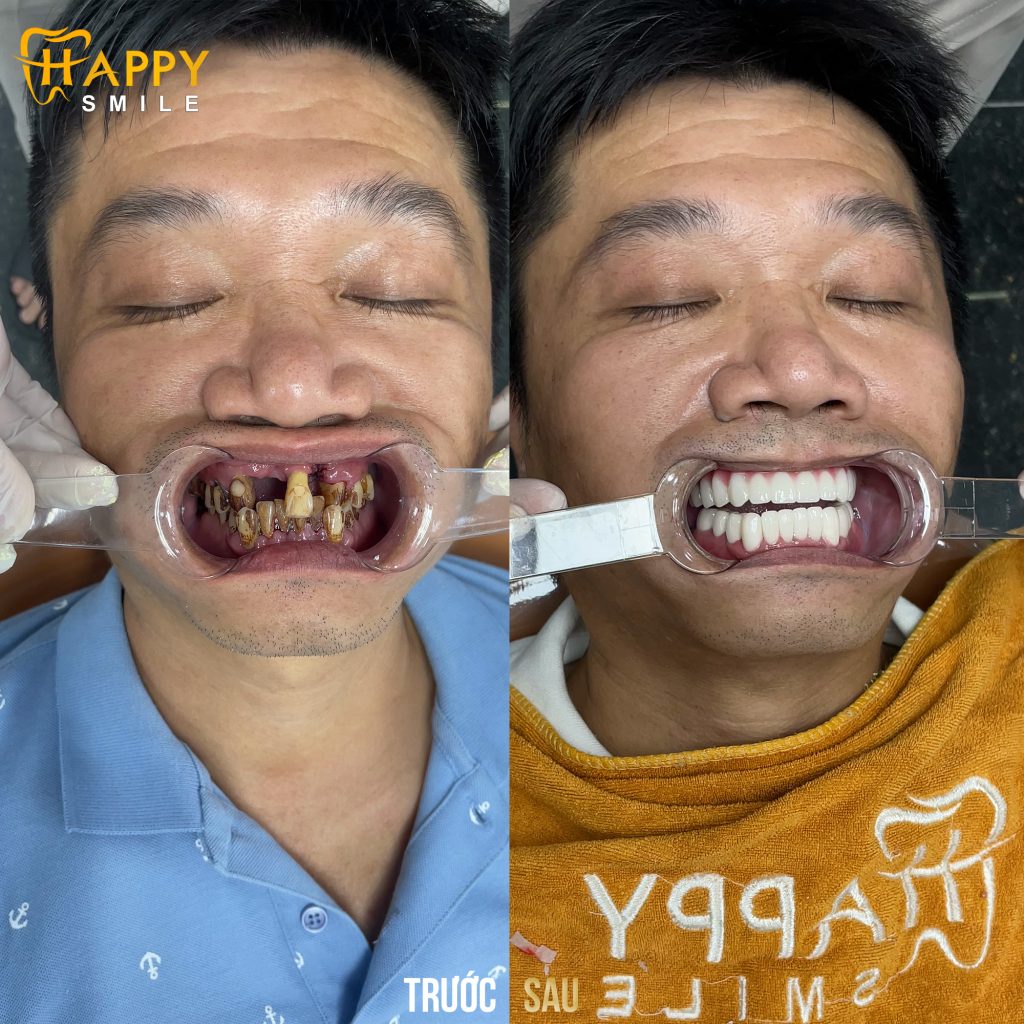
These advantages make dental implants one of the most effective and widely recommended tooth replacement solutions in modern dentistry.
Dental Implant Procedure
The dental implant process generally includes the following steps:
Initial Examination and Consultation
The dentist performs a comprehensive oral examination and takes diagnostic images to assess your oral health and jawbone condition. A personalized treatment plan is then developed based on your needs.
X-rays and 3D Cone Beam CT Scan
Digital X-rays and 3D Cone Beam CT imaging allow the dentist to accurately evaluate bone structure, identify nerve locations, and determine the optimal implant position and implant type.
Implant Placement Surgery
Local anesthesia or sedation is administered to ensure patient comfort during the procedure. The dentist creates a small opening in the jawbone and carefully places the implant fixture. The gum tissue is then sutured to facilitate healing.
Osseointegration Period
Following implant placement, a healing period of approximately 3 to 6 months is required for the implant to fuse with the jawbone through a process known as osseointegration. During this stage, patients should maintain excellent oral hygiene and attend scheduled follow-up appointments.
Crown Placement
Once the implant has successfully integrated with the jawbone, the final dental crown is attached. The crown is custom-made from high-quality ceramic materials to match the appearance of natural teeth.
Regular Follow-Up Visits
After the restoration is completed, regular dental check-ups are recommended to monitor the condition of both the implant and the crown, ensuring long-term success.
The implant treatment process may vary depending on each patient’s oral condition and the selected treatment approach. To achieve optimal results, patients should choose a reputable dental clinic and an experienced implant dentist.
